EXECUTION STORIES / SEO ARTICLE

Exhibition Stall Checklist for Brands Before Show Day

A practical pre-show exhibition stall checklist for brand teams covering design, fabrication, lighting, AV, furniture, venue permissions, staffing, lead capture, and final show-day readiness.

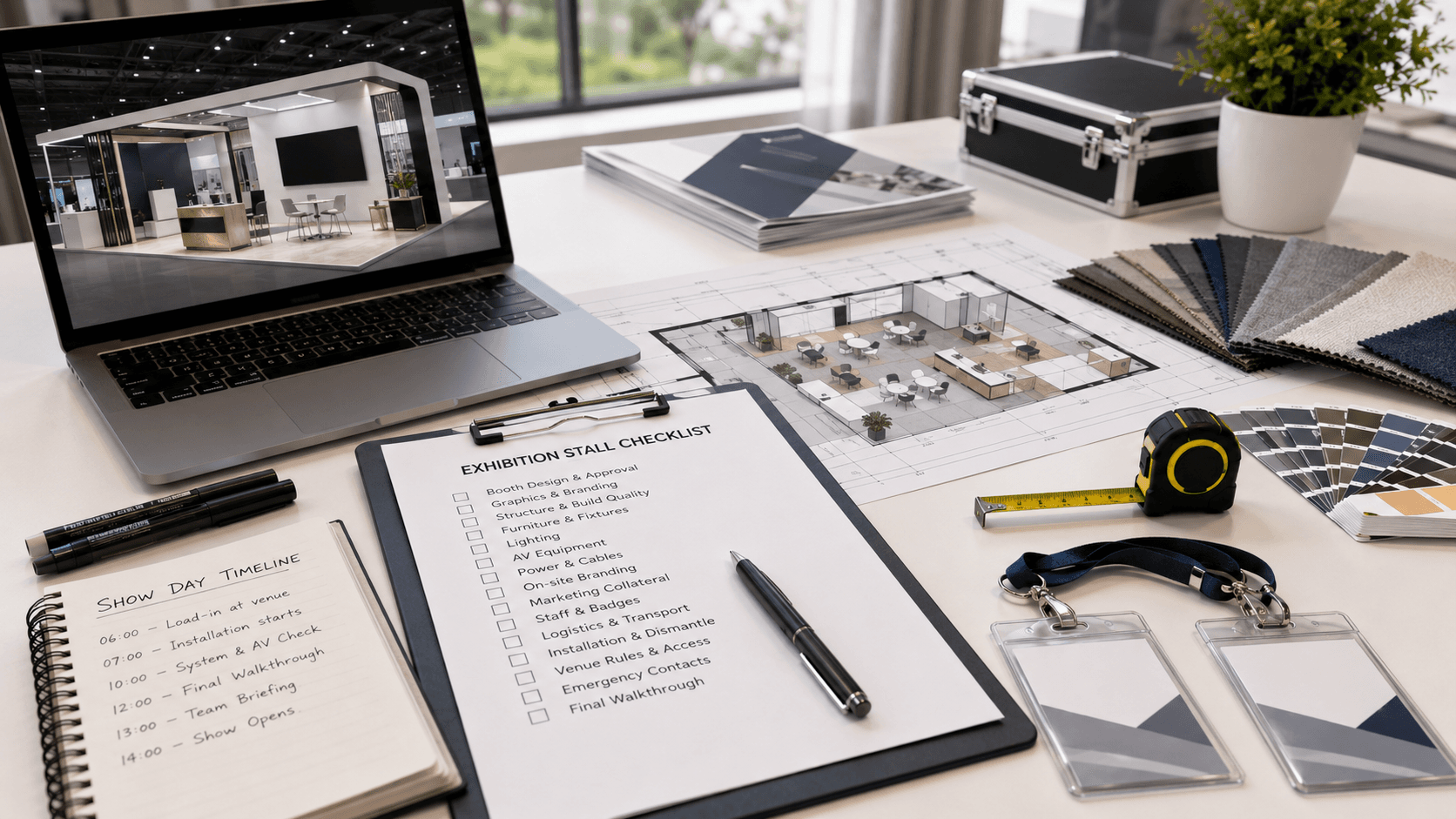
Exhibition stall final setup checklist before show day

Introduction

The last few days before an exhibition are critical because this is when the stall moves from planning to reality. Design files, fabrication quality, branding output, AV content, furniture placement, venue permissions, staffing, and lead capture all have to work together inside a fixed setup window.

A stall can look good in a render and still feel incomplete on show day if the final detailing is weak. A slightly misaligned logo, a screen that does not play, missing brochures, poor lighting, unclear staff roles, or untested QR codes can all affect how visitors experience the brand.

This checklist is built for brand teams, marketing managers, founders, procurement teams, and event managers who want a practical pre-show framework. Use it before the hall opens so the exhibition stall feels ready, polished, and controlled when visitors start walking in.
ServicesAboutExecution StoriesContact

Brand And Design Checklist

Before show day, the brand layer should be checked carefully because visitors notice visual inconsistency very quickly on the exhibition floor.

Final logo files

Confirm that the final approved logo files have been used across wall graphics, reception counters, cut letters, digital screens, and any printed collateral.

Brand colours

Check whether print output, vinyls, backlit elements, and digital content match the approved brand colour direction as closely as possible under venue lighting.

Stall graphics

Review every graphic panel for spelling, alignment, sizing, placement, finish, and visibility from the main visitor approach angles.

Product messaging

Make sure the main product message is short, visible, and easy to understand. Visitors should not have to read too much to know what the brand is presenting.

Print approvals

Keep approved print files and final artwork versions handy in case the team needs to verify dimensions, crop marks, or last-minute replacement output.

Visibility from aisle

Step into the aisle and check whether the brand name, core message, and main attraction are visible before a visitor reaches the stall.

Fabrication Checklist

Fabrication readiness is about more than whether the stall is standing. It should feel stable, finished, usable, and ready for visitor interaction.

Structure readiness

Check that walls, counters, arches, panels, display units, storage areas, and overhead elements are secure and installed as per the approved layout.

Material quality

Review visible materials for damage, warping, scratches, weak edges, poor joints, and areas where the final finish does not match the agreed quality.

Finishing

Look closely at paint, laminate, vinyl edges, seams, corners, cutouts, backlit sections, and counter surfaces. Finish quality is often where rushed work becomes visible.

Flooring

Check flooring for level finish, loose edges, stains, gaps, cable bumps, and safe transitions at the entry point so visitors can move comfortably.

Counters

Confirm that reception counters, demo counters, storage counters, and product display surfaces are clean, stable, correctly branded, and positioned properly.

Meeting areas

If the stall includes meeting space, test whether seating, privacy, table placement, lighting, and visitor movement actually work on site.

Storage

Check hidden storage for brochures, giveaways, staff bags, cleaning material, backup print, water, and operational supplies so the stall does not become cluttered.

Lighting And AV Checklist

Lighting and AV should be tested before visitors arrive because technical problems are harder to solve once the exhibition floor is active.

Power points

Confirm power points for screens, laptops, demo devices, charging, lighting, reception counters, and any product equipment that needs electricity.

LED screens

Check screen mounting, brightness, playback quality, cable routing, safe power supply, and whether the screen is visible from the intended visitor angle.

Display content

Test all videos, loops, presentations, demo files, product slides, and brand films. Keep backup copies on a laptop, drive, and cloud link where possible.

Sound

If sound is required, check speaker volume, clarity, venue restrictions, mic levels, and whether audio disrupts conversations inside the stall.

Backup cables

Keep HDMI cables, adapters, extension cords, chargers, power strips, spare connectors, and cable ties ready because small AV gaps can slow the team down.

Testing schedule

Schedule one full AV test before handover and one quick check before the hall opens. Do not wait for the first visitor demo to test content.

Furniture And Hospitality Checklist

Furniture and hospitality details shape how comfortable the stall feels for both visitors and the internal team.

Chairs

Count all chairs, check condition, confirm placement, and ensure meeting or demo areas have enough seating without blocking movement.

Tables

Check discussion tables, demo tables, side tables, and product display surfaces for stability, cleanliness, and practical access.

Reception counter

Confirm the reception counter is branded, clean, staffed, and stocked with visitor forms, QR codes, brochures, stationery, and lead capture tools.

Brochure stand

Place brochure stands where visitors naturally pause. Keep extra material stored nearby so the team can refill without cluttering the front area.

Water and refreshments

Arrange water and basic refreshments for staff and key visitors, but keep them away from visible branding zones unless hospitality is part of the stall plan.

Dustbins

Keep dustbins accessible but not visually prominent. Waste control helps the stall remain professional through long exhibition hours.

Cleaning support

Confirm who will handle cleaning before opening, during the day, and after closing. High-touch counters and flooring need repeated attention.

Venue And Permission Checklist

Venue rules can affect setup quality, timing, electrical work, safety, and dismantling. Confirm them before final execution pressure begins.

Stall possession timing

Confirm exactly when the team can access the stall area, when material can enter, and what happens if the setup window is delayed.

Setup rules

Review organizer rules for labour access, material movement, noise, cutting, painting, overnight work, contractor badges, and on-site supervision.

Electrical approvals

Check whether electrical load, wiring, distribution, and equipment use have been approved by the organizer or venue team.

Height restrictions

Confirm that the built structure, branding, lighting, and any overhead elements comply with the approved height limits.

Fire safety rules

Check fire safety requirements for materials, exits, extinguishers, electrical work, emergency access, and venue compliance.

Dismantling timing

Confirm dismantling windows, material exit rules, labour availability, truck timing, and who signs off after the stall is removed.

Team Readiness Checklist

A well-built stall still needs a prepared team. Staff should know the objective, visitor flow, talking points, and escalation process.

Staff briefing

Brief the team on the exhibition objective, brand message, visitor profile, product priorities, meeting process, lead quality, and daily responsibilities.

Visitor handling

Define how walk-ins, serious buyers, media, partners, VIPs, and existing clients should be greeted, guided, and escalated.

Lead capture plan

Confirm whether leads will be captured through QR forms, tablets, printed forms, business cards, CRM tools, or manual notes.

Uniforms and badges

Check staff uniforms, ID badges, business cards, access passes, and grooming expectations before the exhibition opens.

Demo scripts

Prepare short demo scripts so product explanations remain consistent, focused, and easy for visitors to understand.

Emergency contacts

Share one contact list covering brand leads, stall supervisor, fabricator, AV support, electrician, logistics, venue coordinator, and security.

Final Show-Day Checklist

Use this quick final checklist before visitors enter the hall. These checks protect the first impression of the booth.

Branding alignment

Walk around the stall and check that every visible logo, panel, cut letter, counter graphic, and product message is straight and clean.

Lights working

Switch on all lights and check for dark spots, glare, flicker, missed focus areas, and loose or visible wiring.

Screens working

Run all screens and demo devices. Confirm content loops, audio levels, laptop connections, and backup files.

Furniture placed

Check whether chairs, tables, counters, brochure stands, and demo furniture are placed according to the visitor flow.

Stall cleaned

Clean counters, flooring, display surfaces, screens, glass, acrylic, meeting areas, and visible storage edges before the hall opens.

Brochures ready

Place brochures, product sheets, catalogues, giveaways, and business cards where staff can access them easily.

QR codes working

Scan every QR code from multiple phones and confirm the correct landing page, form, or digital asset opens quickly.

Lead forms tested

Submit a test lead through the actual form or CRM process and confirm that the team can access the enquiry correctly.

Team briefed

Gather the team for a final briefing on roles, visitor handling, demo flow, lead capture, timings, breaks, and escalation contacts.

Common Things Brands Forget

These items look small, but they often become urgent when the team is already at the venue and the exhibition is about to open.

Extension cords

Keep extra extension cords and power strips for laptops, chargers, screens, demo devices, and last-minute counter changes.

Extra print files

Carry final artwork files, logo files, and backup print-ready PDFs in case any graphic needs urgent replacement.

Tape and tools

Keep basic tape, cutters, markers, cable ties, screwdrivers, scissors, measuring tape, and cleaning supplies at the stall.

Backup laptop

A spare laptop or playback device can protect demos and screen content if the primary device fails.

Extra visiting cards

Keep enough visiting cards for the full team, especially if senior people, sales teams, or partners will visit the stall.

Storage labels

Label cartons, brochures, giveaways, repair items, pantry supplies, and backup material so the team can find things quickly.

Cleaning cloth

Counters, screens, glass, acrylic, and display units collect dust and fingerprints quickly in exhibition halls.

Contact list

Keep a printed and digital contact list for all vendor, venue, brand, AV, electrician, logistics, and emergency contacts.

Conclusion

Good exhibition execution depends on final detailing, not just design. The render may sell the idea, but show-day readiness is built through checks on branding, fabrication, lighting, AV, furniture, storage, venue permissions, staffing, and visitor handling.

The strongest exhibition stalls feel calm because the team has already removed friction before visitors arrive. Every cable, counter, screen, brochure, QR code, meeting chair, and staff role has been checked before the first conversation begins.

If your brand is preparing for an exhibition, use this checklist as a working handover tool. It will help the team move from a good-looking stall to a booth that is genuinely ready for business on the exhibition floor.

GET SUPPORT

Planning an exhibition stall?

Get an exhibition stall consultation before branding, fabrication, setup, staffing, and final show-day checks start becoming urgent.

Frequently Asked Questions

What should brands check before exhibition show day?+

Brands should check branding alignment, fabrication finish, lighting, AV content, furniture, storage, venue permissions, staff briefing, lead capture, housekeeping, and emergency contacts before show day.

When should the final exhibition stall checklist be reviewed?+

The final checklist should be reviewed during venue setup and again before the exhibition hall opens. This gives the team enough time to correct branding, lighting, AV, furniture, cleaning, and lead capture issues.

Why are final stall checks important even after design approval?+

Design approval does not guarantee show-day readiness. Final checks confirm that the built stall, printed graphics, lighting, AV, furniture, storage, and team briefing all match the plan on the actual exhibition floor.

What do brands often forget before exhibition opening?+

Common misses include extension cords, backup print files, tape, tools, spare laptop, extra visiting cards, storage labels, cleaning cloths, QR code testing, and updated contact lists.

Who should own the final exhibition stall checklist?+

The checklist should have one clear owner, usually the event manager, brand lead, or on-ground supervisor. They should coordinate with fabrication, AV, branding, logistics, venue, and staffing teams.

How can brands avoid last-minute stall problems?+

Brands can avoid last-minute problems by freezing artwork early, confirming venue rules, testing AV before opening, briefing staff, assigning issue owners, and using a structured final handover checklist.

READY TO EXECUTE

Planning an exhibition stall?

Get an exhibition stall consultation.

Get Exhibition Stall ConsultationRead setup timeline
WhatsAppChat with us