EXECUTION STORIES / SEO ARTICLE

Exhibition Stall Cost Guide in India: What Brands Should Budget For

A practical cost guide for brands planning exhibition stalls in India, covering the visible and hidden budget items that affect design, fabrication, branding, logistics, setup, and dismantling.

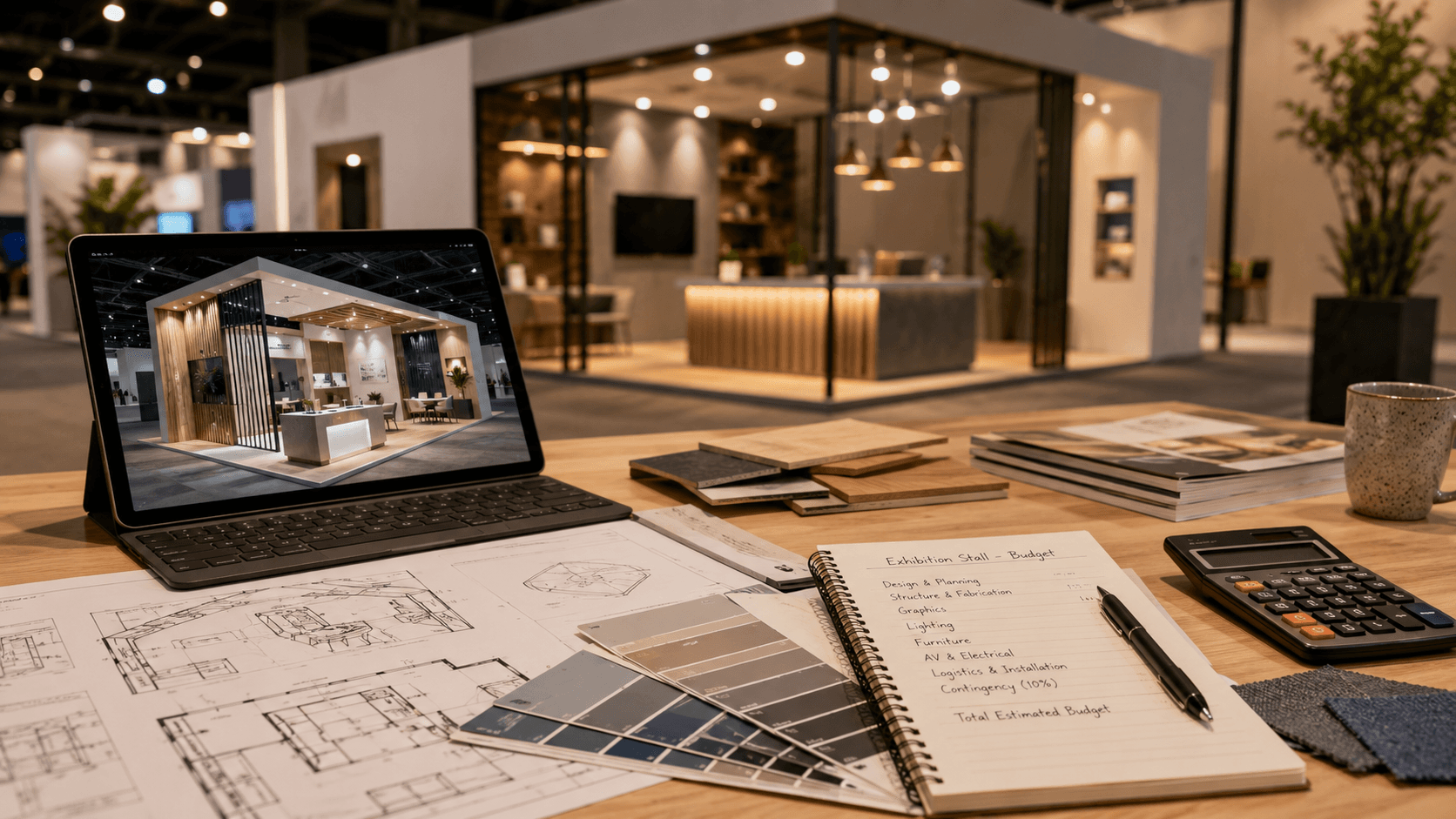
Exhibition stall cost planning and budgeting guide for brands in India
ServicesAboutExecution StoriesContact

Introduction

Exhibition stall cost in India is rarely a single line item. A brand may begin with a design and fabrication quote, but the final budget usually depends on many connected decisions: stall size, materials, branding, lighting, AV, furniture, logistics, venue access, setup labour, dismantling, and last-minute changes.

That is why brands should treat exhibition stall budgeting as a planning exercise, not only a vendor negotiation. A low starting quote can become expensive if it excludes important items. A higher quote can be better value if it includes realistic execution support and fewer surprises. The right question is not only how much the stall costs, but what the cost actually includes.

This guide is written for marketing teams, founders, procurement teams, brand managers, and event managers planning exhibition stalls in India. It explains the major budget heads, hidden cost factors, and practical ways to control spend without weakening the visitor experience.
GET SUPPORT

Planning an exhibition stall?

Get an exhibition stall consultation before locking your budget, design scope, fabrication approach, or venue execution plan.

Why Exhibition Stall Cost Varies So Much

Two exhibition stalls with the same square footage can have very different budgets. One booth may be a simple branded structure with basic counters and graphics. Another may include premium finishes, suspended branding, LED screens, product demo zones, meeting rooms, storage, custom lighting, and complex installation requirements.

Cost also changes by venue, city, timeline, and execution risk. A stall in Mumbai, Delhi, Bengaluru, Hyderabad, or Chennai may involve different logistics, labour, vendor availability, and venue compliance conditions. A project with enough planning time usually gives the team more control than a rushed build that needs express production and late-night coordination.

The biggest mistake is comparing only the final number without comparing scope. A proper exhibition stall cost comparison should check what is included, what is excluded, what quality is promised, and how the vendor will manage the on-ground handover.

Main Exhibition Stall Cost Heads Brands Should Budget For

A practical exhibition stall budget should separate major cost heads clearly. This makes it easier to compare vendor quotes, avoid missing items, and control changes before production begins.

1. Stall design and 3D concept

Design cost covers concept development, layout planning, 3D views, branding placement, visitor flow, and revisions. Some vendors include this in the fabrication quote, while others charge separately when the design scope is detailed.

2. Fabrication and structure

Fabrication is usually the largest visible cost. It includes walls, counters, panels, display units, partitions, meeting rooms, storage units, flooring base, finishes, painting, and installation labour.

3. Branding and graphics

Branding cost includes printed panels, vinyls, cut letters, backlit logos, product visuals, hanging branding, signages, and replacement graphics. Artwork changes after production can increase this cost quickly.

4. Materials and finishes

Material selection has a direct impact on budget. Laminates, acrylic, metal, glass, fabric, paint finish, premium textures, and reusable modular elements all change the final cost and perceived quality.

5. Lighting and electricals

Lighting cost includes spotlights, ambient lighting, product highlights, LED strips, wiring, power distribution, adapters, and electrician support. Good lighting can improve the premium feel of the stall, but it needs to be planned early.

6. AV and digital screens

LED screens, TVs, touchscreens, speakers, laptops, media players, cabling, mounting, and technical support can become a major cost head. AV should be scoped clearly before the final quote is approved.

7. Furniture and meeting setup

Tables, chairs, lounge seating, bar stools, discussion areas, storage cabinets, reception counters, and pantry support may be rented or fabricated. Meeting-heavy B2B stalls should not treat furniture as an afterthought.

8. Product display and demo elements

Product stands, demo counters, shelving, secure display units, sample storage, and interactive zones add cost but can improve visitor engagement when planned around the brand objective.

9. Logistics and transport

Transport cost includes movement of fabricated material, graphics, tools, furniture, AV equipment, labour, and return logistics. Outstation exhibitions usually need more careful logistics budgeting.

10. Setup, supervision, and dismantling

A complete budget should include installation labour, site supervision, venue coordination, overnight support if needed, final cleaning, handover, dismantling, and material removal after the show.

Hidden Exhibition Stall Cost Factors

Many budget overruns happen because these items are discussed too late or assumed to be included. Clarify them before the stall moves into production.

Venue rules and permissions

Some venues have rules around height, rigging, electrical access, fire safety, overtime, contractor passes, material movement, and approved vendors. These rules can affect labour, timing, and compliance cost.

Late artwork changes

Changing logo files, product visuals, copy, dimensions, or print material after production begins can trigger reprinting, rework, express delivery, and installation delays.

Electrical load changes

Adding screens, demo equipment, refrigerators, lighting, or charging points late can change power planning and venue electrical costs.

Rush timelines

A short timeline can increase labour pressure, printing cost, vendor coordination cost, transport urgency, and quality risk. Early planning is usually cheaper than rushed correction.

Storage and housekeeping

Hidden storage, pantry needs, water, cleaning, waste handling, and staff belongings are practical details that can affect how polished the stall looks through the exhibition day.

Damage, repairs, and backup materials

On-ground repairs may be needed for graphics, edges, lights, counters, or transport damage. A sensible budget keeps room for small corrections instead of treating every issue as a crisis.

Common Exhibition Stall Budgeting Mistakes

These mistakes make it harder for brands to compare quotes fairly and often lead to uncomfortable cost increases close to the event date.

Comparing quotes without comparing scope

One quote may include design, graphics, lighting, furniture, transport, setup, and dismantling. Another may include only basic fabrication. The cheaper number is not always the cheaper project.

Treating AV as an add-on

Screens, media playback, cabling, and technical support should be discussed early. Adding AV later can disturb layout, power planning, and wall detailing.

Freezing design before checking execution reality

A design that looks impressive but is difficult to fabricate, transport, or install within venue timelines can increase cost and reduce finish quality.

Ignoring dismantling and return logistics

Many teams focus on the opening day setup but forget that dismantling, material removal, and return logistics also need labour, timing, and cost control.

Leaving approvals too late

Late approvals create rework. Rework creates extra print, extra labour, express movement, and stress on the final finish of the stall.

How Brands Can Control Exhibition Stall Costs

The simplest way to control exhibition stall cost is to freeze the objective early. A booth built for product demos needs a different budget than a booth built for private B2B meetings or brand visibility. Once the objective is clear, the team can decide what is essential and what can be simplified.

The second step is to create a complete scope before asking for final quotes. Include stall size, open sides, height requirement, design expectations, branding count, AV needs, furniture, storage, lighting, logistics, setup timing, and dismantling. A vendor can only quote accurately when the brief is specific.

The third step is to avoid late changes. Most exhibition stall budgets become difficult when artwork, layout, AV, or material decisions keep changing after production begins. Clear approvals, realistic timelines, and one point of coordination help reduce rework.

What To Ask Before Approving An Exhibition Stall Quote

Before approving a quote, ask the vendor what is included in design, fabrication, printing, lighting, electricals, furniture, AV, transport, installation, supervision, dismantling, taxes, and venue coordination. Ask what is excluded just as clearly.

Also ask how revisions will be handled, what happens if the venue changes rules, whether the team will be present during setup, and how final handover will be managed. These questions protect the budget because they reveal the real operating model behind the number.

A strong exhibition stall partner should be able to explain the cost sheet in plain language. If the quote is vague, the project usually becomes vague too.

Conclusion

A good exhibition stall budget is not only about reducing cost. It is about spending on the right things and avoiding surprises. Design, fabrication, branding, lighting, AV, furniture, logistics, setup, and dismantling all affect the final experience visitors see at the venue.

Brands that plan early, compare scope properly, and freeze decisions on time usually get better control over both cost and quality. They also reduce the last-minute pressure that often damages finish, timelines, and team confidence.

If your brand is planning an exhibition stall in India, build the budget around the full execution journey, not just the booth structure. That is the difference between a quote that looks attractive and a stall that actually works on the ground.

Frequently Asked Questions

How much does an exhibition stall cost in India?+

Exhibition stall cost in India depends on stall size, design complexity, materials, branding, lighting, AV, furniture, logistics, venue rules, setup time, and dismantling scope. A realistic budget should include both visible fabrication costs and operational costs.

What is usually included in exhibition stall fabrication cost?+

Fabrication cost usually includes the stall structure, panels, counters, display units, flooring, finishes, basic carpentry, painting, installation labour, and dismantling. Branding, AV, lighting, furniture, logistics, and permissions may be quoted separately depending on the vendor.

Why do exhibition stall budgets increase after the first quote?+

Budgets often increase when branding files change, AV needs are added late, material quality is upgraded, venue rules require extra labour, transport is underestimated, or hidden requirements like storage, electrical routing, and dismantling are not planned early.

Should brands choose the lowest exhibition stall quote?+

The lowest quote is not always the safest choice. Brands should compare scope, material quality, finish standards, installation support, vendor experience, timeline control, and what is excluded from the quote before making a decision.

How can brands control exhibition stall costs?+

Brands can control costs by freezing the objective, stall size, artwork, AV needs, furniture, and approvals early. Clear scope, realistic timelines, and a complete cost sheet reduce rework, rush charges, and last-minute additions.

READY TO EXECUTE

Planning an exhibition stall?

Get an exhibition stall consultation from TriangularDots for design, fabrication, branding, logistics, setup, and on-ground execution planning.

Get an exhibition stall consultationRead fabricator selection guide
WhatsAppChat with us