EXECUTION STORIES / SEO ARTICLE

Exhibition Stall Setup Timeline: From Design to Show Day

A practical exhibition stall setup timeline for brands in India, covering the journey from design brief and approvals to fabrication, logistics, venue setup, final checks, and show-day readiness.

Exhibition stall setup and fabrication timeline for brands in India

Introduction

An exhibition stall does not come together on show day. The visible booth is the final result of a timeline that starts with the business objective, moves through design, approvals, fabrication, branding, logistics, venue setup, final checks, and then show-day operations.

For brands exhibiting in India, timeline control is one of the biggest differences between a smooth stall and a stressful one. A booth can have a good design and still suffer if artwork is delayed, fabrication begins late, material reaches the venue in the wrong sequence, or final checks happen after visitors are already close to entering the hall.

This guide gives marketing teams, founders, procurement teams, and event managers a practical exhibition stall setup timeline. It explains what should happen from the first brief to show day, where delays usually happen, and how to keep design, fabrication, branding, logistics, and on-ground execution aligned.

ServicesAboutExecution StoriesContact

Why Timeline Planning Matters For Exhibition Stalls

Exhibition stall setup is time-sensitive because multiple workstreams depend on each other. Design cannot be detailed properly without the stall size, open sides, height limits, and event objective. Fabrication cannot begin cleanly until the design and material direction are approved. Branding cannot be printed accurately until artwork is frozen. Logistics cannot be planned well unless the material volume, venue rules, and setup window are understood.

When any of these steps slips, the pressure moves forward. A late design approval becomes a rushed fabrication schedule. A delayed artwork file becomes a last-minute print job. A vague logistics plan becomes confusion at the loading gate. The final result may still stand up, but the finish, team confidence, and visitor readiness can all suffer.

A clear timeline protects both cost and quality. It gives the brand enough time to review decisions, gives the fabrication team enough time to build properly, and gives the on-ground team enough room to solve real venue conditions before the exhibition opens.

Exhibition Stall Setup Timeline From Design To Show Day

Use this timeline as a practical planning framework. Exact dates may change by stall size, venue, city, and complexity, but the sequence should stay controlled.

1. Six to ten weeks before: define the objective

Start by clarifying what the stall needs to achieve. Lead generation, product demos, B2B meetings, investor confidence, channel engagement, and brand visibility all need different layouts, budgets, and execution priorities.

2. Six to eight weeks before: confirm stall details

Collect the stall size, open sides, frontage, height limits, power rules, organizer manual, branding restrictions, venue access rules, and mandatory submission dates. These details shape the entire project.

3. Five to seven weeks before: create the design brief

Share brand guidelines, product priorities, visitor journey, meeting needs, demo requirements, AV plans, storage needs, and budget range. A clear brief reduces design revisions and prevents avoidable scope confusion.

4. Four to six weeks before: review layouts and 3D concepts

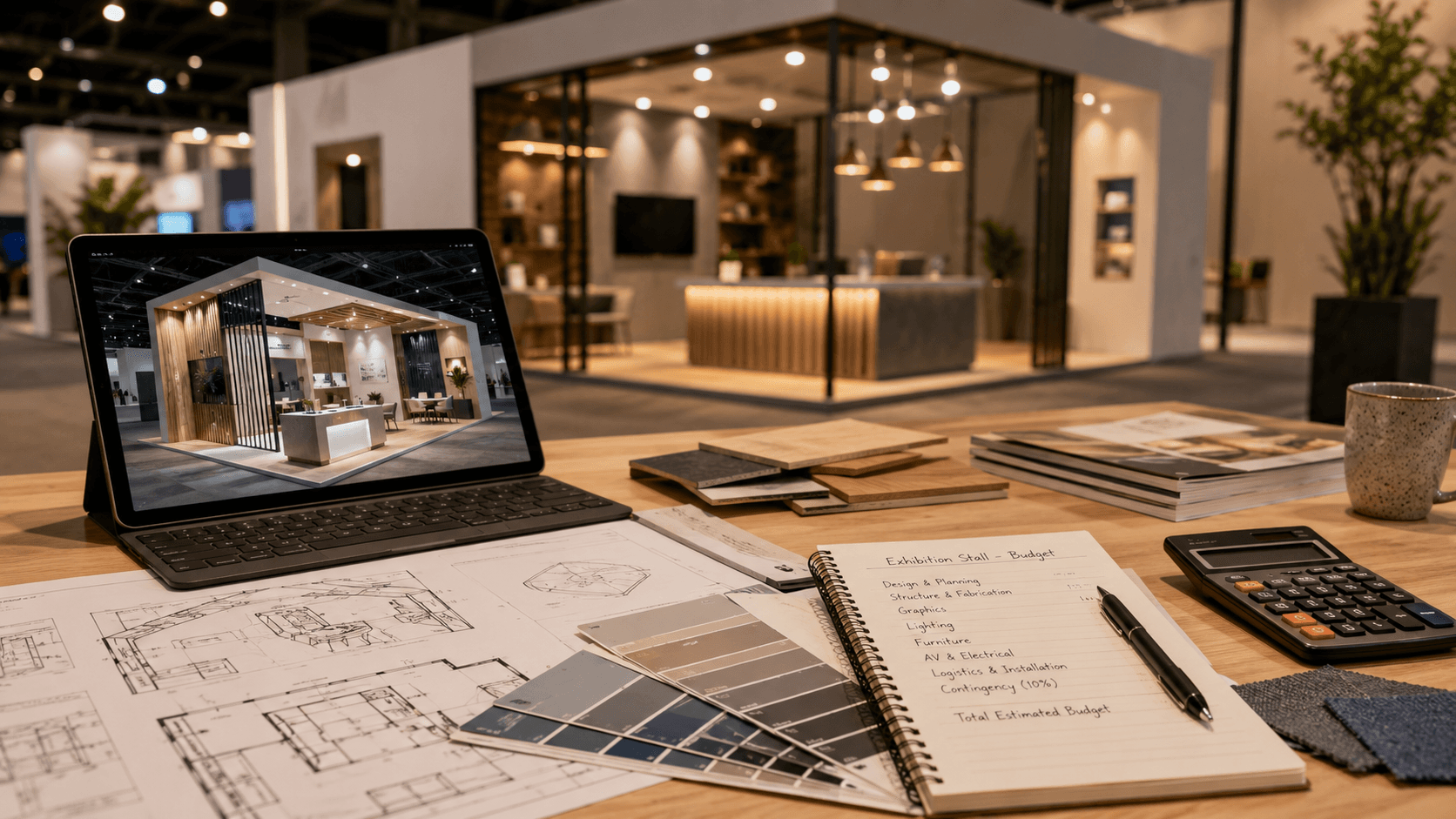
Evaluate the stall design for visitor flow, branding hierarchy, practical use, storage, lighting, furniture, demo areas, and execution feasibility. Do not approve a design only because the render looks attractive.

5. Three to five weeks before: freeze design and scope

Freeze the layout, materials, branding locations, AV requirements, furniture, lighting, electrical points, storage, and fabrication scope. This is the point where late changes start affecting cost and quality.

6. Three to four weeks before: begin fabrication

Once design and scope are approved, fabrication can move into structure building, panels, counters, display units, finishes, flooring elements, storage, branding bases, and production detailing.

7. Two to three weeks before: close artwork and branding

Final logo files, product visuals, wall graphics, cut letters, backlit branding, directional signages, and printed collateral should be checked for dimensions, resolution, colour accuracy, and placement.

8. One to two weeks before: plan logistics and manpower

Confirm packing, dispatch, transport, loading sequence, labour count, supervisor ownership, venue passes, tool kits, backup material, AV movement, furniture movement, and return logistics.

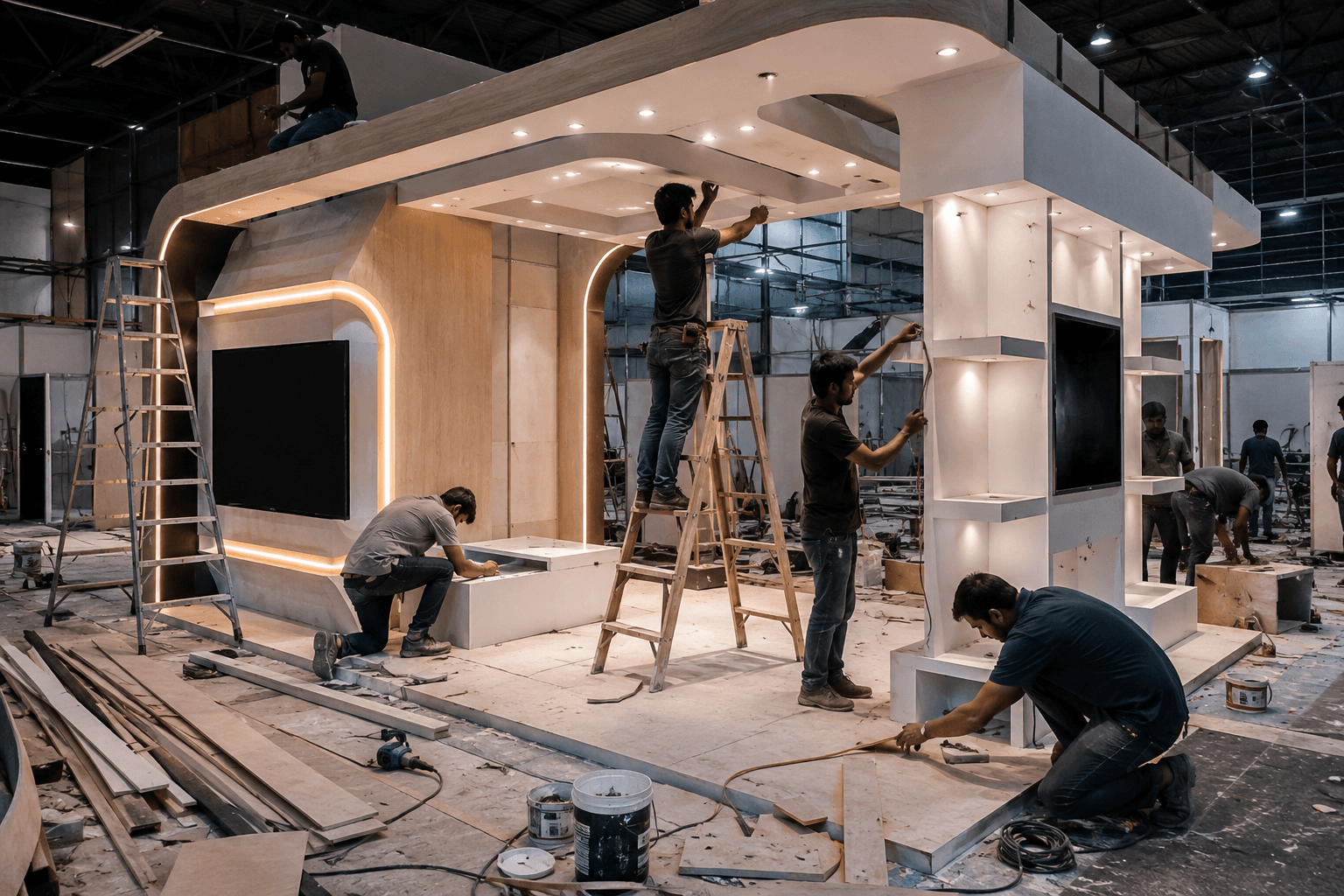
9. Venue setup window: install in the right sequence

At the venue, setup should follow a clear sequence: material receiving, structure, electrical routing, branding, lighting, AV, furniture, storage, cleaning, corrections, and final handover.

10. Show day: check readiness before visitors arrive

Before the hall opens, check branding, lights, screens, sound, counters, meeting areas, storage, staff positions, brochures, lead capture, housekeeping, safety, and the final visitor path.

Final Checks Before The Exhibition Opens

The last stage should be treated as a structured handover, not a casual walk-through. These checks help protect the stall experience once visitors begin arriving.

Branding alignment

Check whether all logos, wall graphics, product visuals, taglines, and signages are straight, clean, correctly placed, and visible from the main approach angles.

Lighting and electricals

Switch on all lights, test plug points, confirm power routing, check screen power, and make sure cables are hidden or safely managed before the stall is handed over.

AV and presentation content

Test every screen, media loop, audio device, laptop, clicker, demo unit, and backup file. AV issues are easier to solve before the visitor rush begins.

Visitor flow and meeting areas

Walk through the stall as a visitor. Check whether entry feels open, demo areas are easy to access, meeting spaces are usable, and no furniture blocks movement.

Storage and housekeeping

Place extra brochures, giveaways, cleaning material, staff bags, and backup items inside hidden storage so the booth looks controlled throughout the day.

Staff briefing

Brief the team on roles, talking points, lead capture, visitor routing, meeting handling, escalation contacts, lunch rotation, and what to do if equipment or branding needs attention.

Common Exhibition Stall Timeline Mistakes

Most setup problems are not sudden. They usually begin earlier in the timeline when decisions are left open or ownership is unclear.

Starting design without real venue information

Designing without stall dimensions, open sides, height limits, power rules, or organizer restrictions often leads to rework once the venue manual is reviewed.

Approving renders without checking build practicality

A render can look premium but still be hard to fabricate, transport, install, or finish within the available setup window. Execution feasibility should be reviewed before approval.

Leaving artwork until fabrication is almost complete

Late artwork affects print quality, branding fit, colour matching, and installation timing. Branding files should be frozen early enough for proper output and correction.

Treating logistics as a last-minute task

Transport, packing, loading sequence, venue passes, labour timing, and material receiving need planning. Otherwise teams lose time searching, moving, and correcting on site.

Skipping a formal handover checklist

Without a structured handover, small issues in lighting, branding, cleaning, AV, furniture, or storage are discovered only after visitors arrive.

How To Keep The Stall Timeline Controlled

The most effective way to control an exhibition stall timeline is to make decisions visible. Keep one working tracker for design, approvals, branding, fabrication, procurement, logistics, venue access, setup, and handover. Each workstream should have a clear owner and a realistic deadline.

It also helps to freeze decisions in stages. First freeze the objective and stall brief. Then freeze the layout. Then freeze branding and AV. Then freeze logistics and setup sequence. If every decision remains open until the end, the project becomes vulnerable to rework.

Finally, keep communication practical. Weekly reviews may be enough early in the project, but the final week needs tighter coordination between the brand, fabrication team, printer, AV partner, logistics team, venue crew, and on-ground supervisor. The aim is not more meetings; it is fewer surprises.

Conclusion

A good exhibition stall setup timeline connects design ambition with real-world execution. It gives the brand enough time to approve the right concept, gives the fabrication team enough time to build cleanly, and gives the venue team enough control to finish before show day pressure begins.

The best exhibition stalls are not only designed well. They are sequenced well. Design, approvals, fabrication, branding, logistics, setup, checks, and staff readiness all need to move in the right order.

If your brand is planning an exhibition stall in India, start the timeline early and treat show-day readiness as the result of every decision before it. That is how the booth feels polished, prepared, and ready for real business conversations when visitors arrive.

GET SUPPORT

Planning an exhibition stall?

Get an exhibition stall consultation before your timeline reaches design freeze, fabrication, venue setup, or show-day pressure.

Frequently Asked Questions

How early should brands start planning an exhibition stall in India?+

Brands should ideally start planning an exhibition stall 6 to 10 weeks before show day, especially when the stall needs custom design, approvals, branding, AV, logistics, and venue setup coordination.

When should exhibition stall design be frozen?+

Design should be frozen before fabrication begins. For most custom stalls, freezing the layout, branding locations, materials, lighting, AV, and furniture 3 to 5 weeks before the event helps reduce rework and rush costs.

What happens during exhibition stall fabrication?+

Fabrication includes building the stall structure, counters, panels, display units, storage areas, flooring elements, finishes, branding bases, and other physical components before dispatch to the venue.

Why are venue setup timelines important?+

Venue setup timelines matter because exhibition venues usually provide fixed access windows. If material, labour, branding, electricals, and AV do not arrive in the right sequence, final handover quality can suffer.

What should be checked before show day?+

Before show day, teams should check branding alignment, lighting, AV playback, electrical points, furniture, storage, cleanliness, visitor flow, staff briefing, lead capture, safety, and final handover details.

READY TO EXECUTE

Planning an exhibition stall?

Get an exhibition stall consultation.

Get Exhibition Stall ConsultationRead the cost guide
WhatsAppChat with us